
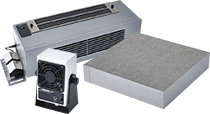



carbon Deodorization System
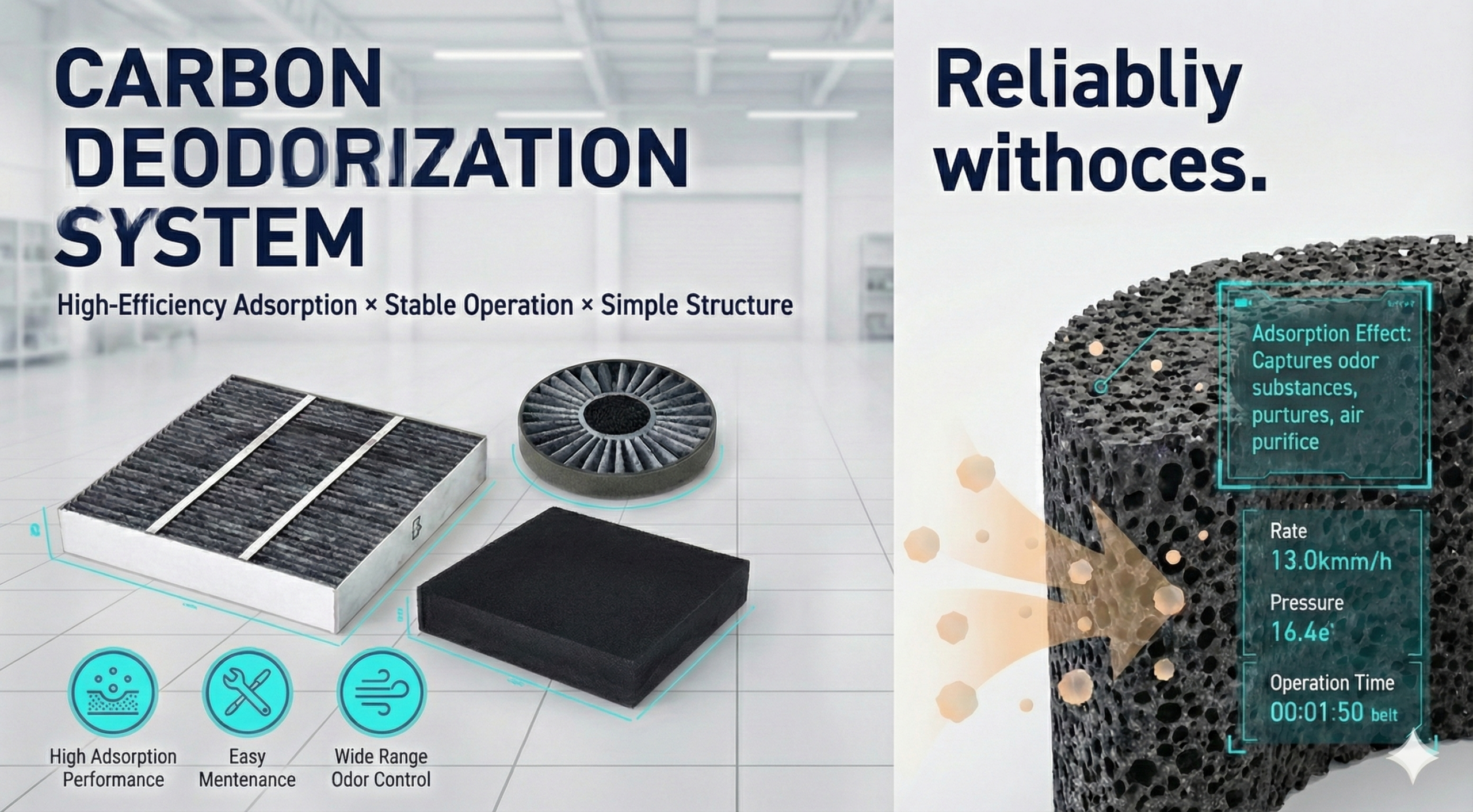
Activated Carbon Filters
Cost-effective, versatile deodorizing for HVAC and industrial exhaust.
Activated carbon filters have been the industry standard for air purification
for decades. Affordable, easy to customize, and compatible with existing equipment —
ideal for small-to-medium airflow applications without major facility modifications.
Easy to Customize
Retrofit-Friendly
Wide Odor Coverage
Product Lineup
Five filter types — each designed for specific airflow and installation
requirements.
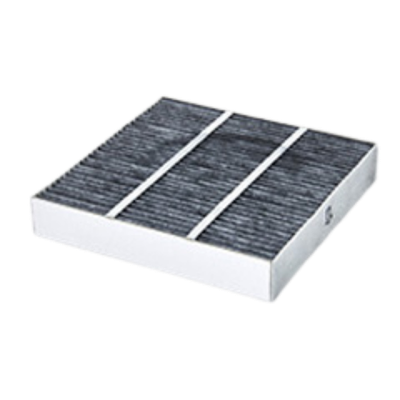
Kyochaku Filter
High-activation granular carbon sandwiched in non-woven fabric,
formed into a pleated shape for maximum surface area with minimal
pressure loss. Proven track record for OA (outdoor air) odor intrusion
and smoking room exhaust treatment.
- Standard — flat pleated for AHU and duct installation
- Φ (Phi) — circular for round ducts and anemo diffusers
Corrugate Honeycomb
Activated carbon impregnated into organic fiber sheets, formed into
a corrugated honeycomb structure. High contact rate with odor molecules
enables superior deodorizing performance even at higher air velocities —
achieving equipment downsizing without sacrificing effectiveness.
- High performance at faster air speeds
- Lightweight — no filter frame required
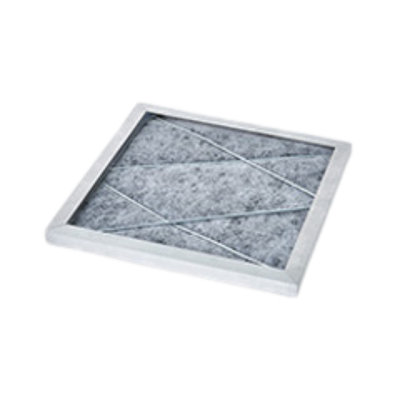
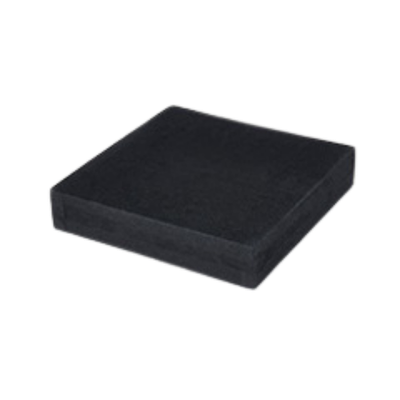
Flex Carbon
Activated carbon powder bonded to urethane foam. Ultra-thin profile
allows direct replacement of existing pre-filters. Despite its slim form,
it delivers impressive carbon loading capacity. Requires aluminum frame
for installation.
- Drop-in replacement for existing pre-filters
- High carbon density in slim profile
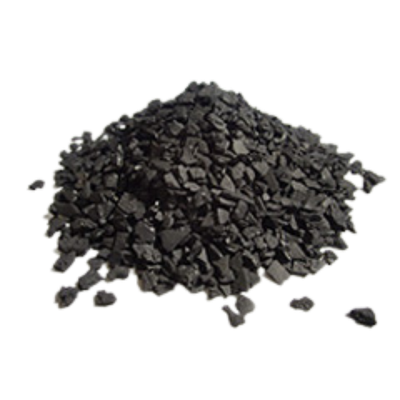
Calsorb
Activated, crushed or formed granular carbon — the classic, cost-effective
approach. Loaded into dedicated cartridges and arranged in zigzag pattern
within a filter box for compact, high-capacity treatment. Offers the
highest carbon content per unit volume.
- Maximum carbon volume at lowest cost
- Cartridge system for easy replacement
How to Choose the Right Filter
Match your installation type, airflow, and budget.
| Filter | Form | Best For | Key Advantage |
|---|---|---|---|
| Kyochaku | Pleated sheet | AHU, ductwork, OA intake | High surface area, low pressure loss |
| Kyochaku Φ | Circular | Round ducts, anemo diffusers, 24h ventilation | Fits where flat filters cannot |
| Corrugate Honeycomb | Honeycomb block | Higher airflow applications | Lightweight, no frame needed, compact |
| Flex Carbon | Ultra-thin sheet | Retrofitting existing pre-filter slots | Drop-in replacement, minimal modification |
| Calsorb | Granular cartridge | Maximum capacity, industrial exhaust | Highest carbon volume, lowest cost per gram |
- Odors are mild (tobacco, OA intrusion, cooking exhaust)
- Airflow is small-to-medium scale
- Low humidity, no mist or heavy dust
- You want to retrofit existing HVAC with minimal modification
- Budget-conscious deodorizing is a priority
How Activated Carbon Filters Work
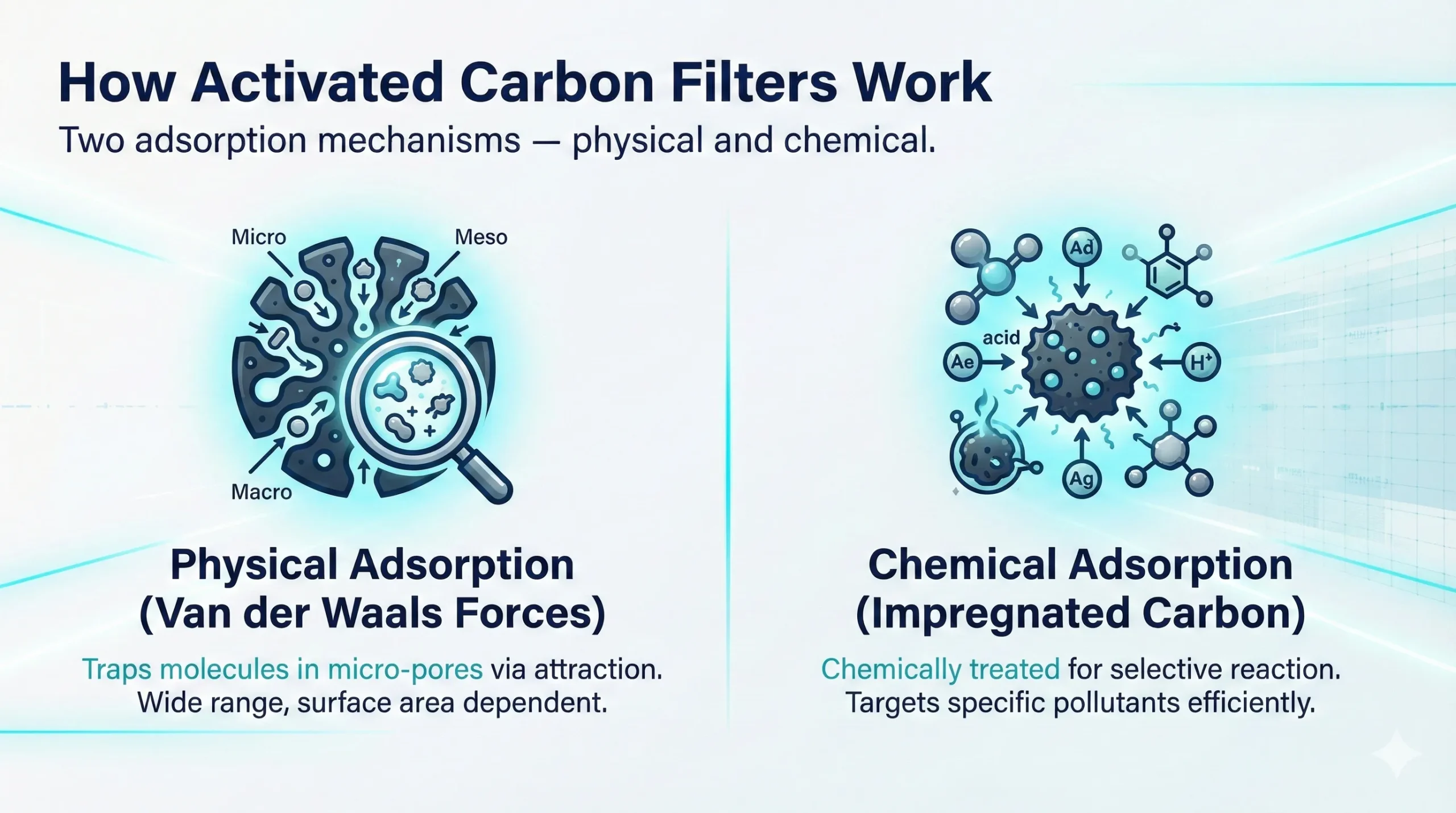
Two adsorption mechanisms — physical and chemical.
Van der Waals Forces
Activated carbon contains millions of micro-pores (micro, meso, macro)
that trap odor molecules through intermolecular attraction.
Performance depends on specific surface area — higher surface area means
more adsorption capacity. Effective against a wide range of substances,
but filter life is reduced if targeting the wrong compounds.
Impregnated (Chemically Treated) Carbon
Carbon treated with specific chemicals that react with target substances,
enabling selective and efficient removal. Ideal when physical adsorption
alone is insufficient or when targeting specific pollutants.
Kalmor offers custom impregnation to match your specific odor profile.
Best Applications for Carbon Filters
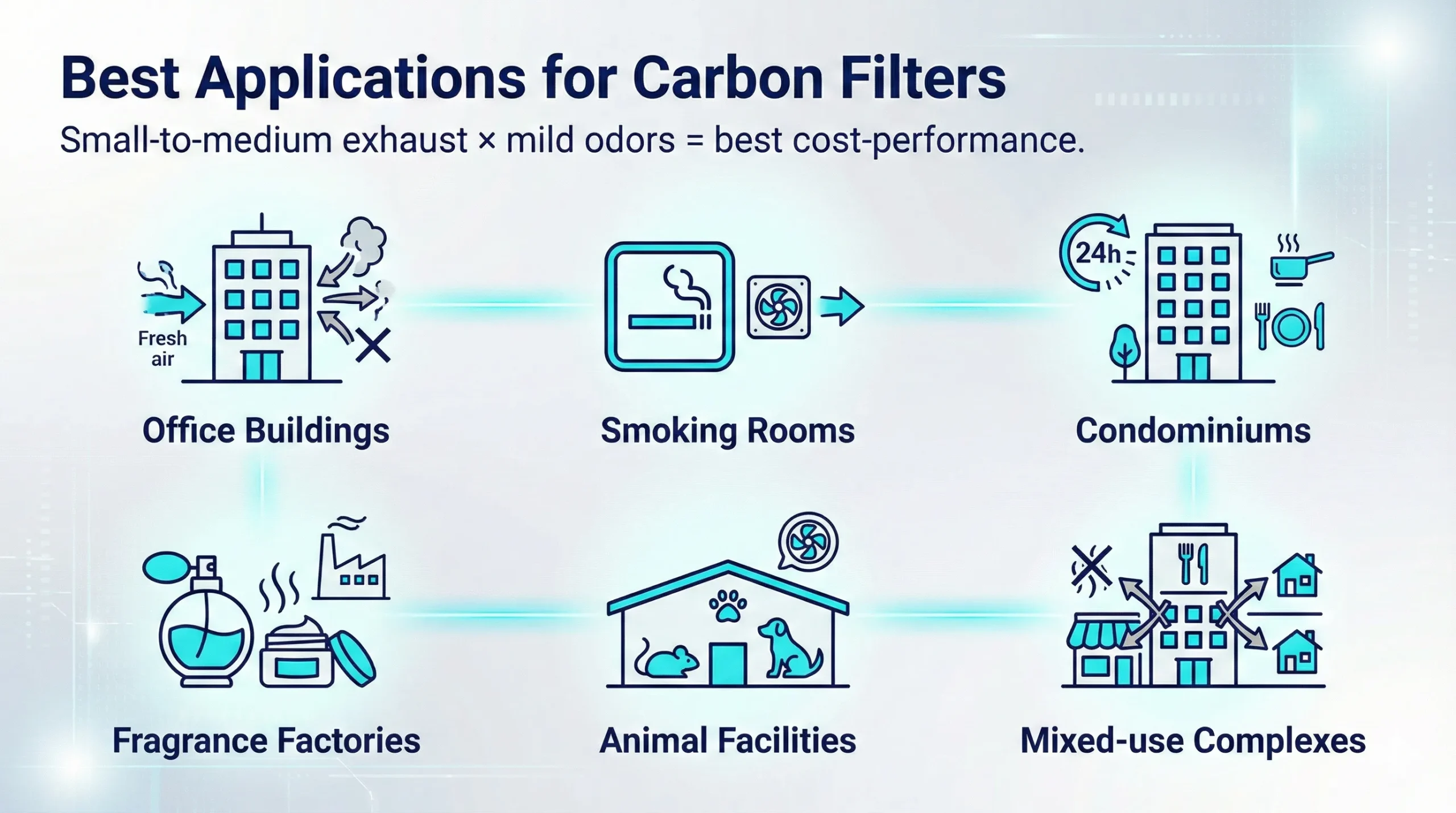
Small-to-medium exhaust × mild odors = best cost-performance.
Office Buildings
Block outdoor air intrusion odors — restaurant exhaust, tobacco smoke,
and traffic fumes entering through fresh air intakes.
Smoking Rooms
Treat exhaust air from designated smoking areas to prevent tobacco odor
migration to adjacent spaces.
Condominiums
24-hour ventilation OA intakes and common area treatment
for cooking and lifestyle odors.
Fragrance Factories
Low-volume exhaust treatment for aromatic compounds
in perfume and cosmetics production.
Animal Facilities
Treat ventilation exhaust from animal breeding and research facilities
to prevent neighborhood complaints.
Mixed-use Complexes
Prevent cross-contamination of odors between tenants — restaurants,
offices, and residential units sharing the same building.
Case Study
Real-world implementation of activated carbon filters.
Restaurant exhaust and tobacco smoke entering through HVAC
Challenge: A new office building near restaurants experienced persistent
cooking and tobacco odors entering through the outdoor air intake system.
The building was near completion — major HVAC modifications were not an option.
Solution: Kalmor designed custom-fit activated carbon pre-filters
matched to the existing AHU dimensions. The retrofit-friendly Flex Carbon filters
were installed without any ductwork changes — ready before the opening date.
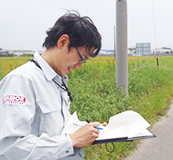
Site survey & odor assessment to
identify intrusion source and airflow.
Select optimal filter type and design
custom dimensions for existing equipment.
Manufacture, deliver, and install — no
ductwork modification required.
FAQ
How long do activated carbon filters last?
Filter life varies by usage environment and odor composition, but averages
approximately 1 year, with a maximum of about 2 years. At installation,
Kalmor calculates the optimal replacement schedule based on your
airflow and odor characteristics. Using filters past their replacement date
may result in reduced performance and potential odor complaints.
How should used filters be disposed of?
Commercial activated carbon filters must be disposed of as industrial waste,
as they may contain adsorbed hazardous substances or chemicals.
Consult your local industrial waste management provider for proper disposal
procedures specific to your region.
Can activated carbon filters be washed with water?
No — both household and commercial activated carbon filters should not be
washed with water. Water contact significantly reduces adsorption capacity
and cannot be restored. Maintenance is limited to dust removal.
If a filter has been accidentally washed, replacement is recommended.
When should I choose carbon filters over other deodorizing methods?
Carbon filters are optimal for small-to-medium exhaust volumes with mild odors
(tobacco, outdoor air, cooking) in low-humidity, low-dust environments.
For strong industrial odors, high-volume exhaust, or humid/misty conditions,
consider ceramic filters, plasma deodorizers, or scrubber systems.
Kalmor can assess your situation and recommend the best approach.
Can filters be custom-sized for existing equipment?
Yes — this is one of the key advantages of activated carbon filters.
Kalmor designs and manufactures filters to match your existing AHU,
duct, and ventilation equipment dimensions. No major modifications required.
Custom-fit deodorizing for your facility.
Contact us for filter selection, custom sizing, and consultation.