





Portable Odor Sensor POLFA
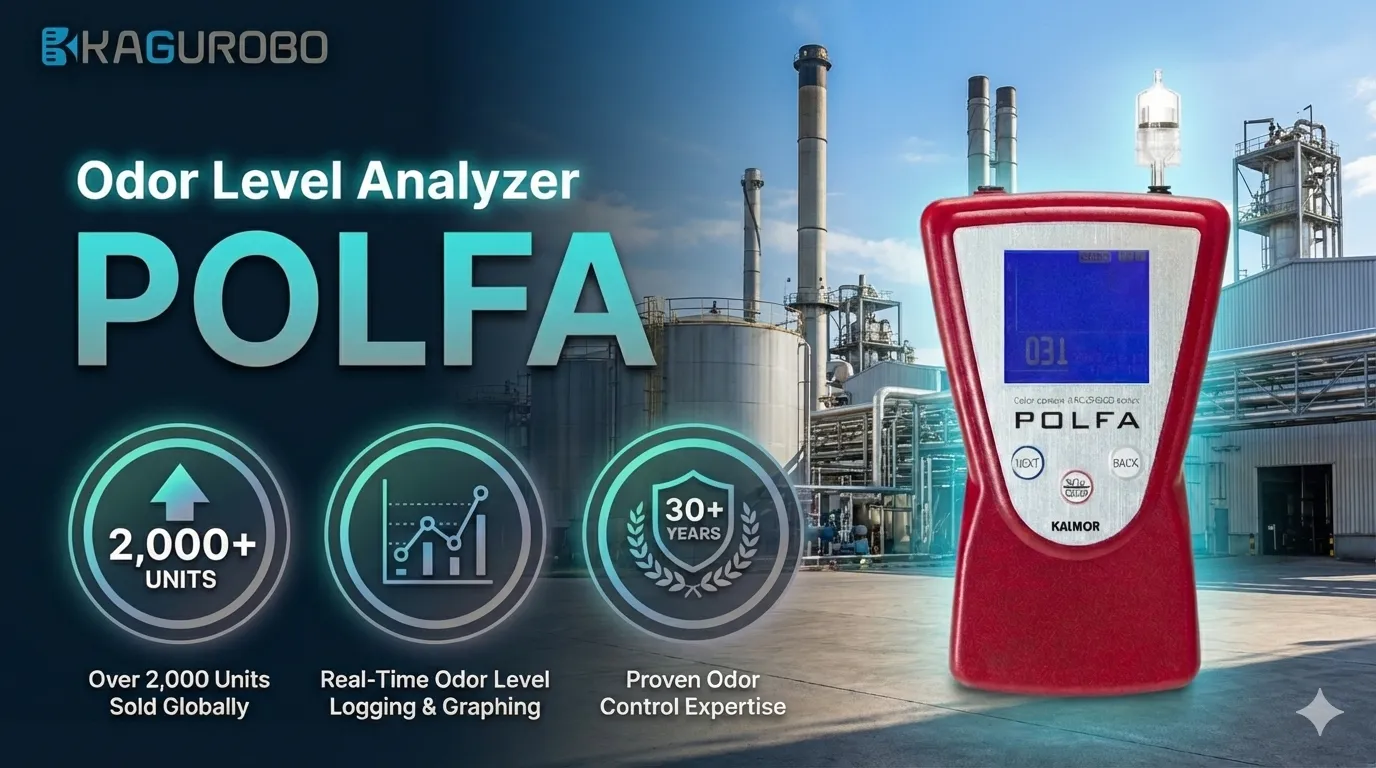
Portable Odor Sensor
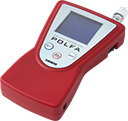
POLFA: A field-ready odor sensor designed for daily odor management.
Developed and refined through extensive on-site use to make odor intensity trends
easier to capture and manage—portable, high-sensitivity, and practical for routine work.
Auto sampling by micro pump
Time-series graph display
microSD / CSV export
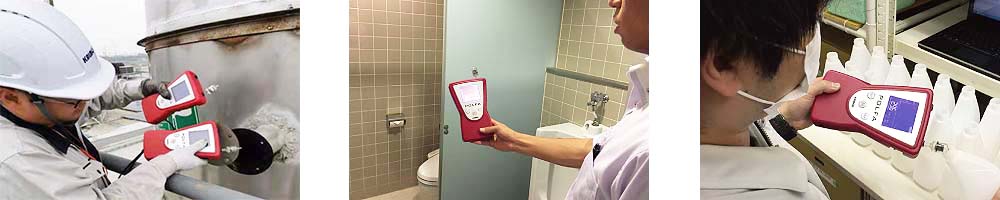
Best fit
POLFA is built for practical on-site odor checks where you need repeatable readings
and trend visibility during routine work.
- Daily odor management inside plants / facilities and around site boundaries
- Before/after checks for deodorization or odor control work
- Odor presence/absence checks for indoor odor complaints
- Quality control checks at receiving/shipping where odor matters
- Trend evaluation for diffusion of fragrances or chemicals
- Regulatory compliance requiring official “odor index / odor concentration” values (use
required official methods) - Cases where identification/quantification of specific chemical species is required (use
analytical instruments)
Want to confirm whether your target odor can be monitored effectively?
Rental options may be available for trial use (B2B).
Product specifications
Key specifications for POLFA (portable odor sensor).
| Item | Specification |
|---|---|
| Model | Odor Sensor POLFA |
| Target | Various odor components, offensive odors, fragrances, etc. |
| Sensor principle | Metal-oxide semiconductor gas sensor |
| Display | LCD digital display |
| Sampling | Automatic suction by micro pump |
| Flow rate | Approx. 350 mL/min |
| Power | 4 × AA batteries or dedicated AC adapter |
| Operating temperature | 0–40 °C |
| Dimensions | 127.7 (W) × 209.5 (H) × 40 (D) mm |
| Weight | Approx. 375 g |
| Continuous operation | Approx. 16 hours (AA batteries, display off) |
| Data output | microSD card; CSV download supported |
Why POLFA is chosen
Designed for on-site usability
Developed to support practical field odor work: portable operation, readable
display, and features focused on routine odor management.
Track changes over time
Time-series visibility helps when a single instant value is not enough—use
trends to interpret variability during measurement windows.
Data handling without special software
Measurement data can be saved to microSD and exported as CSV for reporting and
recordkeeping.
How it works
POLFA uses a metal-oxide semiconductor gas sensor and calculates a proprietary
odor-intensity indicator (PF value) from the detected electrical changes.
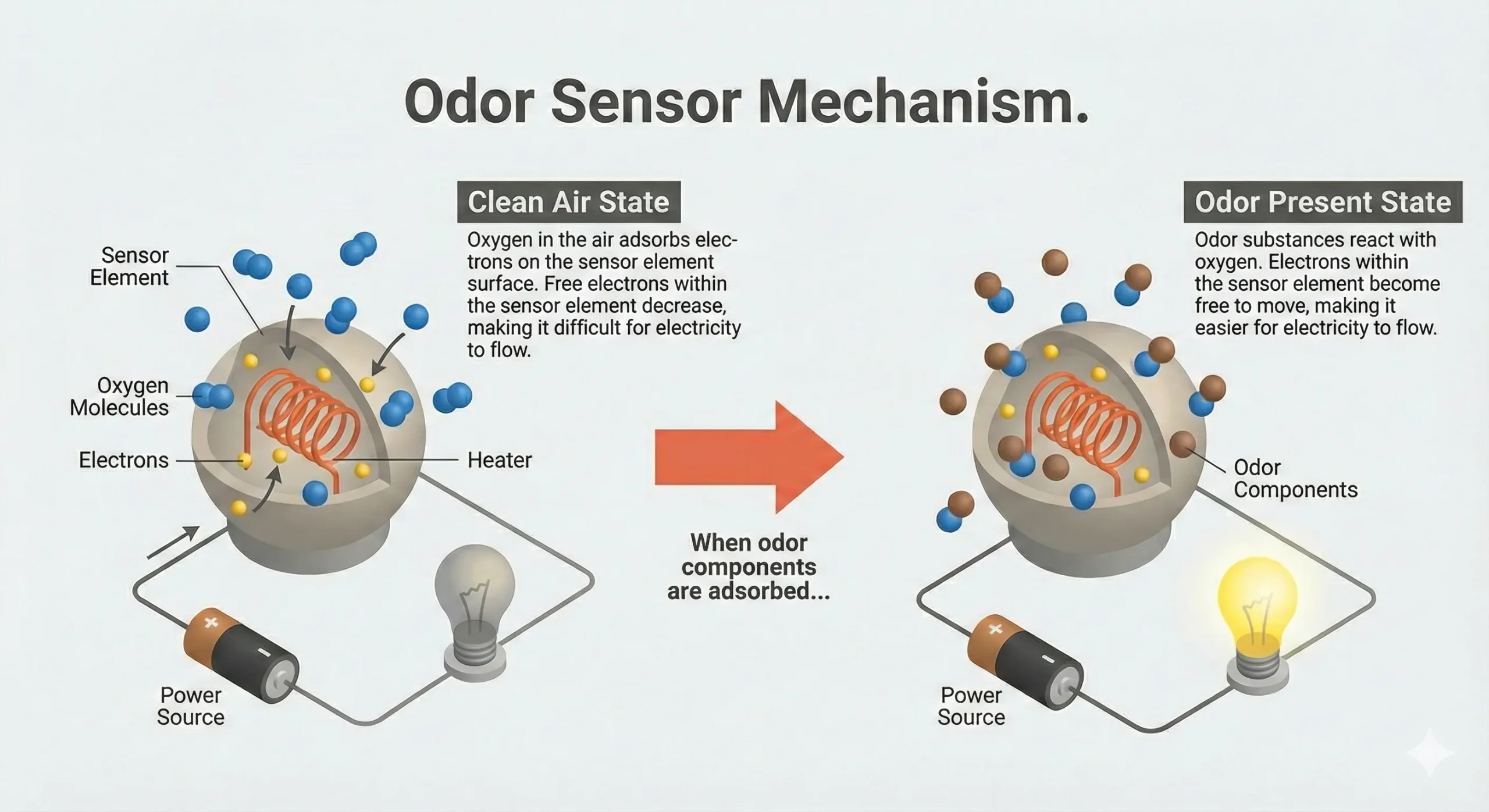
Sensor mechanism (overview)
The sensing element is heated; oxygen adsorption affects electron availability.
When odor components with reducing potential react, the electrical behavior changes.
POLFA reads this change and outputs a calculated value as an indicator of odor intensity.
Important note
The PF value is different from official odor concentration / odor index.
When official values are required, use the required standard methods.
Comparison: how to choose a field odor monitoring approach
Odor management often requires combining tools depending on whether you need trend
monitoring, regulatory values, or chemical identification.
| Approach | Best for | Limitations | Typical use |
|---|---|---|---|
| Portable MOS odor sensor (POLFA) | On-site screening, routine checks, trend tracking (time-series) |
Not a regulatory odor index; response varies by odor composition |
Daily odor management, before/after effect checks |
| Olfactometry / official odor index measurement | Regulatory compliance values (odor index / odor concentration) |
Requires specialized procedure; higher cost/time per measurement |
Complaints, inspections, compliance documentation |
| Chemical analysis (e.g., GC/MS) | Identify/quantify specific chemical species | Not optimized for rapid field trend checks | Root-cause investigation, material/process validation |
If you describe your odor source, location, and the decision you need to make
(trend monitoring vs. compliance vs. identification), we can propose a practical measurement
plan.
FAQ
Can POLFA provide official “odor index / odor concentration” values?
POLFA outputs its own indicator (PF value). Official odor index / odor concentration values
are obtained via designated olfactory measurement methods; use the required method when
compliance is needed.
How do I export measurement data?
Data can be stored on a microSD card and downloaded as CSV.
Is rental available before purchasing?
Trial rental may be available (typically for corporate customers).
Please contact us with your application details.
What maintenance is recommended?
Maintenance guidance is provided by the manufacturer; consult for
recommended service intervals and parts replacement.
Ready to start measuring odors on-site?
Contact us for a consultation, demo, or rental inquiry.

Kalmor Technical Services(Foreign Language) 製品一覧
- Factory Exhaust Ceramic Filter Deodorization System “Zeogaia”
- Portable Odor Sensor POLFA
- Ceramic filter deodorizer for kitchen exhaust ZEOGAIA
- Fixed-point odor observation system LIMOS
- Injectable Low-Temperature Plasma Deodorizer NeoPlas
- Industrial Deodorizing Systems
- carbon Deodorization System
- Odor measuring device
- Odor Assessment Service
- Microgel deodorizer
- Powerful Ozonizer
- Odor Index & Odor Concentration Testing